
Avoiding downtime: When to replace electrical components in your air compressor
During your routine minor and major compressor services, our technicians may recommend replacing electrical components such as motors, contactors, pressure switches or controllers.
These suggestions often raise valid business questions: Is this really necessary? Can it wait? Is it just a precaution?
The answer lies in how these parts function over time, and the risks involved in delaying their repair or replacement.
This blog explains why we make these best practice compressor recommendations and how they are based on performance, manufacturer guidelines, and our experience working with compressed air systems across Perth and Western Australia.
Why the condition of your compressor’s electrical components is important
Electrical components are responsible for controlling power, regulating pressure, and managing your compressor’s operations. Over time, these parts naturally degrade due to heat, electrical wear, cycling frequency and environmental exposure.
Even components that seem to be working can become inefficient or unstable, creating hidden risks that may not be immediately visible, but can escalate quickly.
Common risks include:
- Increased energy consumption – Inefficient motors, failing contactors and degraded controllers often draw more power to perform the same tasks.
- Overheating and shutdown – Poor contact or insulation breakdown causes heat build-up, leading to shutdowns or potential fire risk.
- System-wide damage – Faulty switches or control failures can trigger pressure spikes or allow your compressor to run in unsafe conditions.
- Motor failure – One of the most expensive electrical issues, motor burnout often results from extended operation under stress.
These issues rarely occur in isolation. One worn electrical component often places strain on the rest of the system, leading to more widespread and costly issues.
Why our technicians recommend replacement before electrical failure
Our service technicians are trained to detect the early warning signs of electrical issues during your service. Recommendations to replace electrical components aren’t made lightly, they’re based on signs of wear or degradation and our best practice approach to servicing.
- Signs of wear or degradation
Issues such as slower switching, heat generation, noise, or inconsistent behaviour are often clear signs that an electrical component is no longer performing as intended.
- Best practice servicing
We follow a proactive servicing approach. That means identifying and addressing risks before they result in costly breakdowns. Replacing components at service intervals when there are warning signs, rather than waiting for them to fail, will reduce the potential for breakdowns, unexpected downtime, or critical system failures.
Electrical components we monitor (and may replace) during your compressor service
When our technicians service your compressed air system or attend a breakdown, they conduct a visual inspection and performance testing, then factor in the hours of use and manufacturer recommendations to identify whether the following electrical components require replacement:
- Electric motors – Signs of potential issues include increased operating temperature, unusual noises, vibrations, or reduced efficiency.
- Contactors – Often degrade due to carbon build-up or electrical pitting. Contactor failure can prevent start-up or cause arcing.
- Pressure switches – Worn switches may not open or close at the correct pressure, affecting compressor control.
- Controllers – Can malfunction due to dust ingress, vibration, or circuit degradation, leading to unreliable or unsafe operation.
Because these electrical components essentially control your compressor, failures can have a flow on effect, leading to other performance issues across your compressed air system.
Your compressor might be working but it’s not always efficient or safe
A compressor component that’s still technically working may not be operating efficiently or safely. For example:
- A contactor may switch, but with resistance that generates heat and damages nearby parts.
- A pressure switch may activate, but at the wrong pressure range.
- A motor may run, but under strain, increasing its power draw and shortening its life, as well as increasing your energy costs.
Delaying the replacement of electrical components that show wear, tear, or faults leads to increased energy use, a higher risk of sudden failure, and higher repair costs.
Replacement at the first sign of damage or malfunction lets you stay in control of your budget and your operations.
Working conditions, compressor location and environmental factors can impact the condition of electrical components
Many factors contribute to wear and tear of your compressor, including your electrical components.
Factors such as higher ambient temperatures, dust and airborne contaminants, and heavy-duty cycles or continuous operation all play a role.
That’s why our best practice advice is tailored to manufacturer guidelines, actual operating conditions, and your compressor usage.
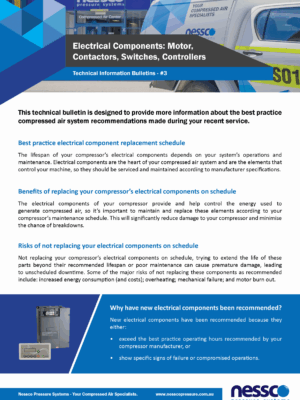
Supporting our compressed air recommendations with facts
To help customers understand the reasons behind our best practice advice, we provide access to technical bulletins on a wide range of compressed air topics, including our electrical components technical bulletin.
These technical bulletins outline:
- The role of each compressor component
- Signs of deterioration
- Suggested replacement intervals
- Risks of failure or not replacing components on schedule
The resources we provide support our recommendations, help you understand why replacements have been recommended (even when they still seem to be working) and help you make more informed decisions.
Planned compressor maintenance actually leads to long-term savings
Planned replacement of electrical components offers significant benefits for your business:
- Improved energy efficiency and reliability
- Reduced downtime
- Lower overall repair costs by being proactive and replacing components before they fail
- Protection of other system components
Our service team focuses on your entire compressed air system. We want to help you avoid emergency breakdowns and unnecessary repairs through proactive, scheduled maintenance and best practice advice.
Schedule your compressor service
Nessco Pressure Systems are your compressed air specialists in Perth, offering expert servicing and advice for all major compressor brands.
To book your compressor service, contact our service team on 1300 290 638, email info@nesscopressure.com.au or complete our contact us page.