
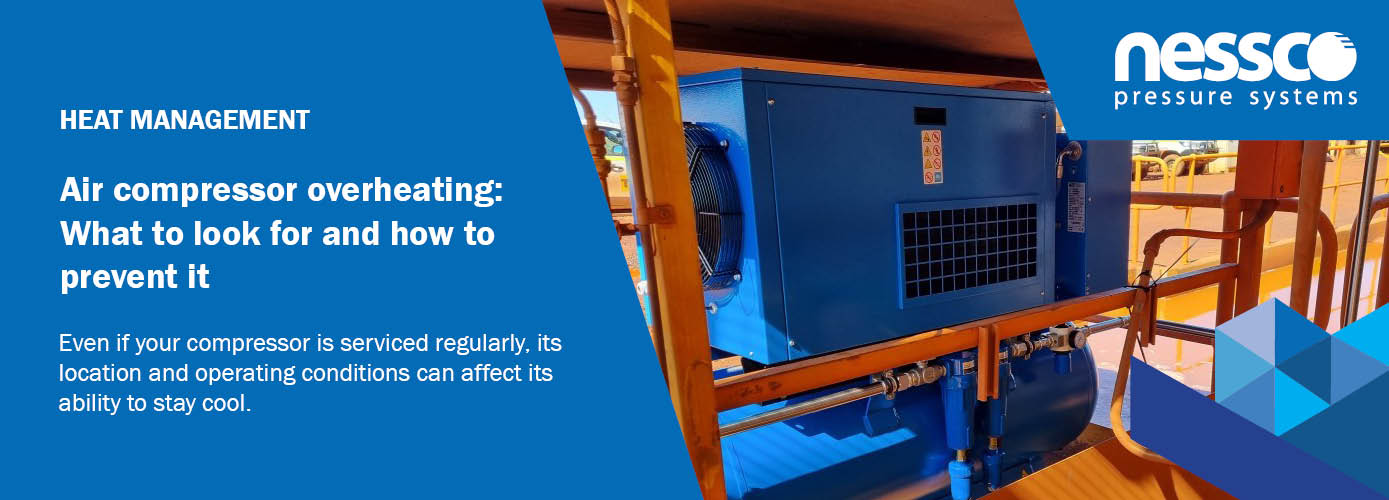
Air compressor overheating: What to look for and how to prevent it
Your air compressor generates a considerable amount of heat during normal operation. During summer, managing that heat becomes increasingly important to prevent air compressor overheating, particularly for compressors operating outdoors, in confined spaces or in hot and dusty workshops.
Even a well-maintained compressor can overheat if the conditions in which it operates are less than ideal.
In many cases, heat-related issues can be addressed without making significant changes to your compressed air system. A relatively small investment in improving compressor ventilation, installing ducting or protecting your compressor from direct sunlight can help reduce running costs, extend the life of components and prevent costly breakdowns.
Is your compressor running hotter than usual?
An increase in your compressor’s operating temperature doesn’t necessarily mean it is overheating, but it is worth investigating if temperatures are consistently higher than normal.
Some of the things to look out for include:
- Higher than usual operating temperatures
- Intermittent high-temperature warnings
- Cooling fans running for longer periods (on systems with temperature-controlled fans)
- Compressor shutdowns during the hottest part of the day
- Increased moisture in your compressed air lines
- Reduced air dryer performance
While some of these issues may have other causes, they are worth paying attention to as we move into summer.
How hot is too hot for an air compressor?
The maximum ambient and operating temperatures vary depending on the type, make and model of your compressor.
It’s worth checking your compressor manufacturer’s specifications and monitoring your compressor’s operating temperature so you know what’s normal for your equipment.
Remember that the temperature outside isn’t necessarily the temperature of the air entering your compressor. On a 38°C summer day, the temperature inside a small compressor room or workshop with poor ventilation could be considerably higher, particularly if other machinery is also generating heat.
The hotter the air entering your compressor’s cooling system, the more difficult it is to remove the heat generated during air production.
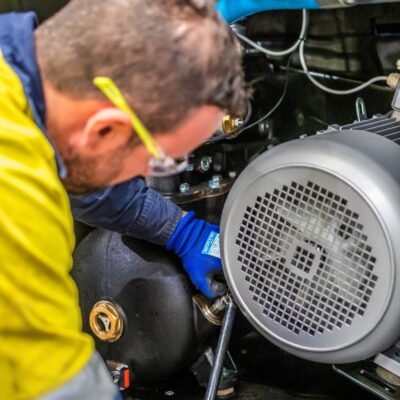

Five ways to help prevent your compressor from overheating
1. Protect outdoor compressors from the elements
We recommend reviewing the location of compressors installed outside, particularly those exposed to direct sunlight.
While some compressors are designed for outdoor use, exposure to the sun throughout the day can add to the heat generated by the compressor itself.
Having a compressor shed or awning fabricated can help protect your equipment from direct sunlight, rain and other environmental conditions.
When designing a compressor shelter, there are several things to consider:
- The direction of the sun throughout the day
- Ventilation and the supply of cooling air
- Where hot air from the compressor will be discharged
- Manufacturer-recommended clearances
- Access for servicing and repairs
- The compressor’s suitability for outdoor installation
A shelter that restricts airflow or traps hot air can create additional problems, so its design and location are important.
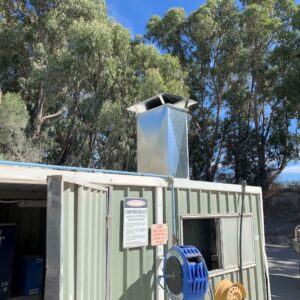
2. Install ducting to remove hot air
Where does the hot air from your compressor go?
If your compressor is installed in a small room, enclosed shed or workshop with limited ventilation, the hot air generate by the compressor can build up around the equipment and be drawn back into its cooling system.
As the compressor continues to operate, the temperature of the surrounding air can continue to rise. Installing ducting to direct hot cooling air outside the building can help prevent this from occurring.
Ducting is worth considering for compressors installed in:
- Small or enclosed compressor rooms
- Workshops with limited ventilation
- Areas where other machinery generates heat
- Rooms housing multiple compressors and dryers
The ducting needs to be designed and sized to suit the compressor, taking into account cooling airflow requirements, allowable airflow resistance and the supply of replacement air into the room.
Depending on the installation, additional ventilation or changes to the room layout may also be required.
3. Address dust in your compressor’s operating environment
Compressors operating in dusty environments, such as cabinetmaking workshops, manufacturing facilities and abrasive blasting facilities, can be more susceptible to cooling issues.
As dust accumulates on coolers, it reduces their ability to dissipate heat. A cooler that is partially blocked may not cause noticeable problems during winter, but as ambient temperatures increase in summer, your compressor may start running hotter than usual.
If your compressor operates in a dusty environment, there are several options worth discussing with your service technician:
- More frequent cooler inspections and cleaning
- Drawing cooling air from a cleaner location
- Installing appropriately designed intake or exhaust ducting
- Relocating the compressor away from dust-generating machinery
- Reviewing your current service intervals
The most suitable option will depend on the type of dust, the location of your equipment and the conditions in which it operates.
4. Review the condition of your compressor’s cooling components
Your compressor relies on several components to regulate its operating temperature.
These may include cooling fans, oil thermostats, oil coolers, aftercoolers and high-temperature hoses.
Higher ambient temperatures can make existing problems with these components more noticeable. For example, if an oil thermostat isn’t functioning correctly, it may restrict the flow of oil through the cooler when cooling is required. This can cause the compressor’s operating temperature to increase.
If your service technician has recommended replacing cooling system components, it’s worth reviewing these recommendations before the hotter summer months. Replacing a worn thermostat or deteriorating hose during a planned service is generally less costly and disruptive than dealing with a compressor breakdown or major component failure.
5. Check the area around your compressor
Has anything changed around your compressor since it was installed?
Additional machinery, changes to your workshop layout or the storage of equipment and materials can all affect the airflow around your compressor.
Check that:
- Cooling air inlets and outlets aren’t obstructed
- There is sufficient clearance around the compressor
- Ventilation grills are clear
- Hot air from other machinery isn’t being directed towards the compressor
- Hot air from one compressor isn’t being drawn into another compressor or dryer
Some ventilation issues can be addressed simply by moving equipment or materials away from your compressor.
Is the heat also affecting your air dryer?
Your compressor isn’t the only piece of equipment that can be affected by higher temperatures.
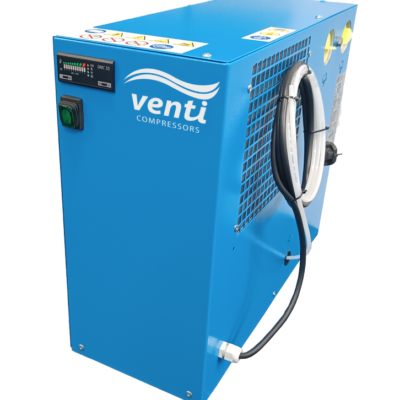
Refrigerated air dryers are designed to operate within specified ambient and compressed air inlet temperatures.
If these temperatures are exceeded, the dryer’s ability to remove moisture from compressed air can be reduced.
If you’ve noticed more moisture in your air lines during summer, check the location and ventilation of your dryer as well as your compressor.
What could it cost to address the issue?
Not all compressor overheating issues require expensive repairs.
Depending on the cause, the solution may be as simple as improving ventilation, cleaning a cooler or replacing a worn cooling system component.
Other systems may benefit from ducting or a purpose-built compressor shed or awning.
The cost of these improvements is worth weighing up against the increased running costs, compressor repairs and the downtime associated with a breakdown or critical failure.
Is your compressor running hotter than it should?
If you’ve noticed an increase in your compressor’s operating temperature or it’s displaying high-temperature warnings, don’t ignore it. If your compressor is repeatedly shutting down on high temperature, don’t just reset it without addressing the issue (even though it can be tempting!).
Our compressed air specialists can assess your system, its location and operating environment, then recommend improvements to reduce the risk of overheating.
We can also assist with compressor ducting, installation requirements, cooling system maintenance and advice on compressor sheds.
Call our service team on 1300 290 638 or email info@nesscopressure.com.au to discuss your compressed air system.