
Compressed Air Leaks: The Cost of Wasted Air
Compressed air leaks can be easy to overlook, particularly in a busy workshop or production environment.
A small leak may not seem significant. But when compressed air escapes continuously through hoses, fittings, couplings or other parts of the system, your compressor still uses energy to produce that air.
Across a large compressed air system, multiple leaks can add up to unnecessary energy use and additional demand on your compressor.
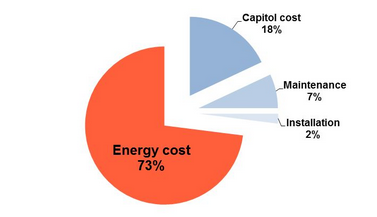
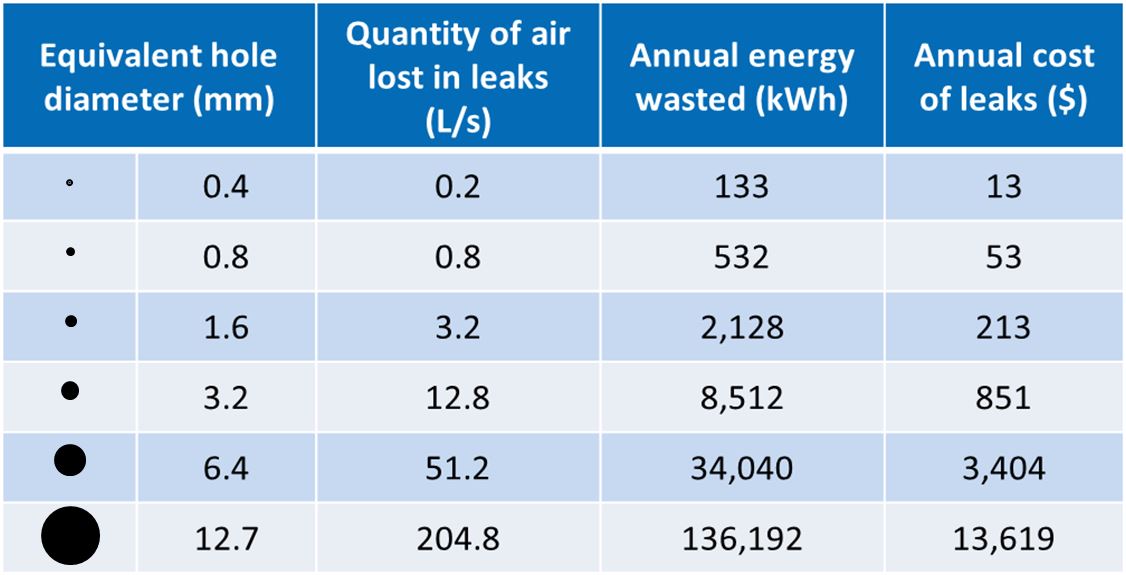
The above table lists the estimated amount of air leaking from a system (operating at a pressure of 700kPa for 2000 hours per year), the energy wasted, and its cost for an electricity tariff of 10c/kWh. Analysing one of the results in the table as an example, if the sum of all leaks is equivalent to a hole of 12.7mm diameter, 204.8 l/s of air is lost, wasting 136,192kWh of energy each year at a cost of $13,619.
Why do compressed air leaks cost money?
Compressed air requires electricity to produce.
When air escapes before reaching the equipment or process that needs it, the energy used to compress that air is also wasted.
The cost of a leak depends on several factors, including:
- The size of the leak
- System operating pressure
- How many hours the system operates
- Compressor efficiency
- Electricity costs
- The number of leaks throughout the system
This means there isn’t one standard figure for how much a compressed air leak costs.
A small leak in a system that operates occasionally will have a very different impact from multiple leaks across a production facility running long hours.
Leaks can affect more than energy use
Energy isn’t the only reason to pay attention to compressed air leaks.
As leakage increases, the compressor needs to supply additional air to maintain system demand. In some systems, this can increase compressor operating hours or contribute to pressure problems at the point of use.
If pressure starts falling where compressed air is needed, increasing the compressor discharge pressure can seem like a quick solution.
But increasing system pressure without addressing the underlying problem can increase energy use and may make existing leaks worse.
Finding the cause of the pressure loss is a better place to start.
Where do compressed air leaks occur?
Leaks can develop throughout a compressed air system.
Common areas include:
- Hoses and flexible connections
- Couplings and fittings
- Pipework joints
- Regulators
- Isolation valves
- Condensate drains
- Connections to pneumatic equipment
Some leaks are obvious. You may hear air escaping when the workshop is quiet.
Others can be difficult to identify, particularly in noisy production environments or across large compressed air systems.
Why regular leak checks are worthwhile
Compressed air systems change over time.
Hoses wear, fittings loosen, seals deteriorate and equipment gets moved or modified. A system that had few leaks several years ago may look very different today.
Checking for leaks as part of ongoing compressed air system maintenance can help identify wasted air before it becomes accepted as part of normal operation.
Once identified, leaks can be prioritised for repair based on their size, location and impact on the system.
Look at the complete compressed air system
If your compressor is running more than expected, struggling to maintain pressure or using more energy, leaks may be part of the problem.
But they aren’t the only possible cause.
Air demand, system pressure, pipework design, compressor control, equipment condition and changes in production can all affect compressed air performance.
This is why NPS looks at the wider system rather than assuming one issue is responsible.
Our compressed air audits can help identify leaks and other areas where system performance may be improved. We provide a report outlining our findings and practical recommendations for your compressed air system.
Concerned about compressed air leaks or unexplained pressure loss? Call our service team on 1300 290 638 to discuss your system.