
Abrasive blasting: Is your compressed air system up to the job?
Abrasive blasting is widely used for surface preparation, protective coatings, industrial maintenance and asset preservation. These applications can place significant demands on compressed air systems, with nozzle size, operating pressure and compressor capacity all affecting blasting performance.
There are also important workplace safety considerations. Abrasive blasting can expose workers to dust and airborne contaminants, making appropriate respiratory protection and breathing air quality essential.
For businesses carrying out abrasive blasting in Western Australia, understanding both the compressed air requirements and the relevant WorkSafe WA regulations can help support safe and efficient operations.
Understanding the risks of abrasive blasting
Abrasive blasting can generate large amounts of dust and airborne contaminants. The risks will vary depending on the material being blasted, the abrasive media being used and the working environment.
Potential hazards include:
- Respirable dust
- Toxic contaminants
- Excessive noise
- Flying particles
- Reduced visibility
- Confined space risks
Managing these risks can involve a combination of controls, including appropriate equipment, worker training, maintenance, dust control and respiratory protective equipment (RPE).
Does your compressor have enough capacity for abrasive blasting?
Abrasive blasting can place significant demands on a compressed air system. Nozzle size, operating pressure and the number of operators all affect how much compressed air the equipment requires.
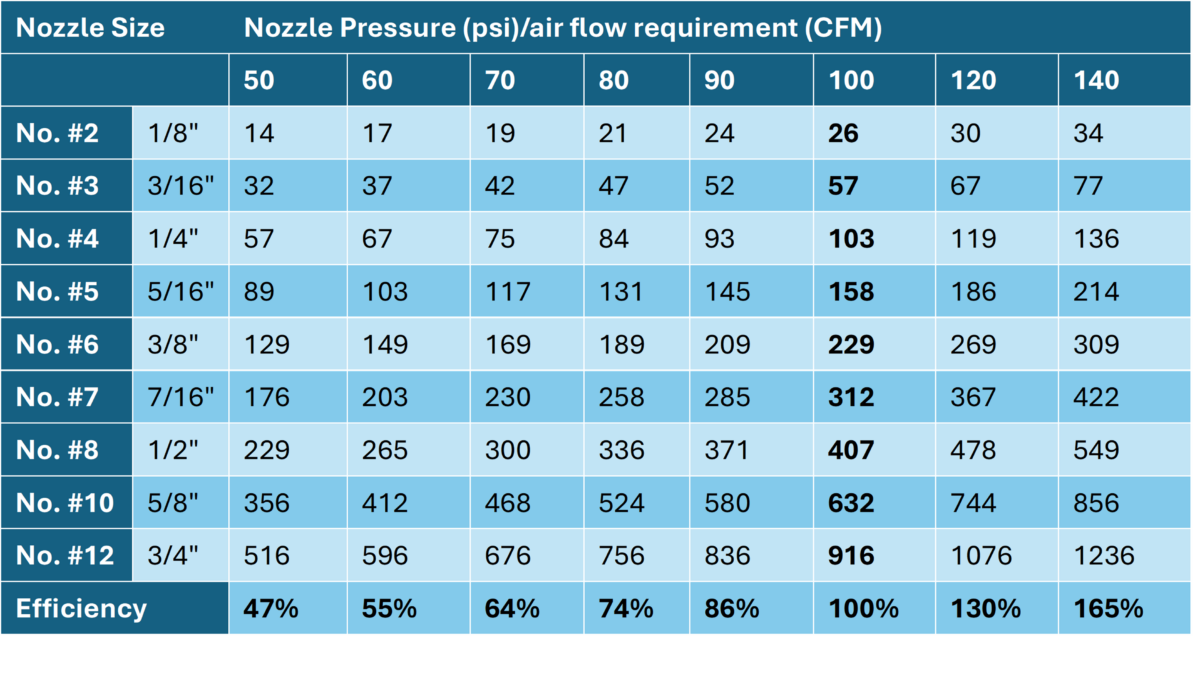
Nozzle size and operating pressure directly affect the amount of compressed air required for abrasive blasting. As nozzle diameter and pressure increase, so does the volume of air needed to maintain effective blasting performance.
For example, a No. 7 blast nozzle operating at 150 PSI (approximately 10.3 bar) requires considerably more airflow than a smaller nozzle operating at a lower pressure.
The reference chart below outlines the approximate compressed air requirements for different nozzle sizes and operating pressures when using garnet abrasive.
This information can help operators:
- Check whether their compressor has sufficient capacity to support the selected nozzle and operating pressure.
- Select a suitable nozzle size and pressure for their blasting requirements.
- Identify potential airflow limitations that could affect blasting performance.
- Plan compressed air requirements to maintain consistent operation and minimise unnecessary downtime.
Understanding nozzle air consumption is an important part of selecting and sizing compressed air equipment for abrasive blasting applications.
Source: https://www.blastone.com.au/air-consumption-cfm-per-blast-nozzle-using-garnet-abrasive/
Nozzle wear is another consideration. As abrasive material wears the internal bore, air consumption can increase. If the compressor cannot maintain the required flow and pressure at the nozzle, blasting performance and productivity may suffer.
Businesses also need to account for other equipment drawing air at the same time, including additional blasting nozzles and pneumatic tools. Pressure losses through hoses, fittings and air treatment equipment can further affect the pressure available at the point of use. Compressor selection should therefore consider the total simultaneous demand, the manufacturer’s nozzle requirements and the system layout.
Blasting air and breathing air have different requirements
Where operators use supplied-air respirators, the breathing air supply needs separate consideration. The blasting nozzle and the respirator perform different functions and have different flow, pressure and air quality requirements. A compressor that has enough capacity to operate a blasting nozzle is not automatically suitable for supplying air that workers breathe.
The breathing air system must provide the flow and pressure specified by the respirator manufacturer and air that meets the applicable breathing air quality requirements. It must also be designed and managed to prevent contamination. Where blasting equipment and respirators draw from a common compressed air source, the system must be specifically assessed and equipped for safe breathing air use, with enough capacity for both demands. Never assume that ordinary industrial compressed air is safe to breathe.
This is why compressor sizing, suitable breathing air equipment, regular maintenance and breathing air testing should all form part of planning an abrasive blasting operation.
Did you know?
Where supplied-air respiratory equipment is used for abrasive blasting, the respirator itself is only one part of the system.
The quality of the air being supplied to the worker is just as important.
What’s in your breathing air?
Compressed air can contain contaminants that aren’t always visible or detectable by smell.
Moisture, oil, carbon monoxide, carbon dioxide and particulates can affect breathing air quality. The condition of the compressor, filtration equipment and the wider breathing air system can all influence the quality of the air reaching the worker.
This is particularly important during abrasive blasting, where supplied-air respiratory equipment may be worn for extended periods.
Regular compressor servicing, filter replacement and breathing air testing all play a role in maintaining the system.
Why test your breathing air?
You can’t tell whether breathing air meets the required standard simply by looking at the compressor or filtration system.
Testing provides actual data on the quality of the air being supplied and can identify contaminants that might otherwise go unnoticed.
Regular breathing air testing can help:
- Confirm the quality of the supplied breathing air
- Identify moisture, oil, carbon monoxide, carbon dioxide and particulates
- Check the performance of the filtration system
- Provide a documented record of test results
- Support workplace safety and compliance requirements
At Nessco Pressure Systems, we recommend breathing air testing every three to six months, depending on the application, system and working environment.
Breathing Air and AS/NZS 1715:2009
AS/NZS 1715:2009 – Selection, use and maintenance of respiratory protective equipment provides guidance for workplaces using respiratory protection, including requirements relating to supplied breathing air.
Testing should be considered alongside regular system maintenance, filter replacement and inspection of the equipment supplying the breathing air.
For abrasive blasting operations, this helps provide confidence that the complete system – not just the respirator – is being properly maintained.
When was your breathing air last tested?
If supplied breathing air is used for abrasive blasting, spray painting, confined space work or other industrial applications, it is worth checking when the system was last tested.
A compressor can appear to be operating normally while contaminants are still present in the air supply.
Regular testing gives you a clearer picture of what’s actually in the air your workers are breathing.
WorkSafe WA abrasive blasting Code of Practice
Businesses carrying out abrasive blasting should also be familiar with the WorkSafe WA Abrasive Blasting Code of Practice.
The Code provides guidance covering areas including:
- Hazard identification and risk management
- Blasting equipment
- Respiratory protection
- Dust control
- Maintenance and inspection
- Worker training and responsibilities
The Code of Practice is available from the WorkSafe WA website.

Compressed air support for abrasive blasting operations
Whether you’re reviewing compressor capacity, planning a new blasting setup or checking the quality of your breathing air supply, Nessco Pressure Systems can help.
We support businesses across Perth and regional WA with compressor sales, servicing, compressed air system advice and breathing air testing.
Contact our compressed air specialists on 1300 290 638 or email info@nesscopressure.com.au to discuss your requirements.