
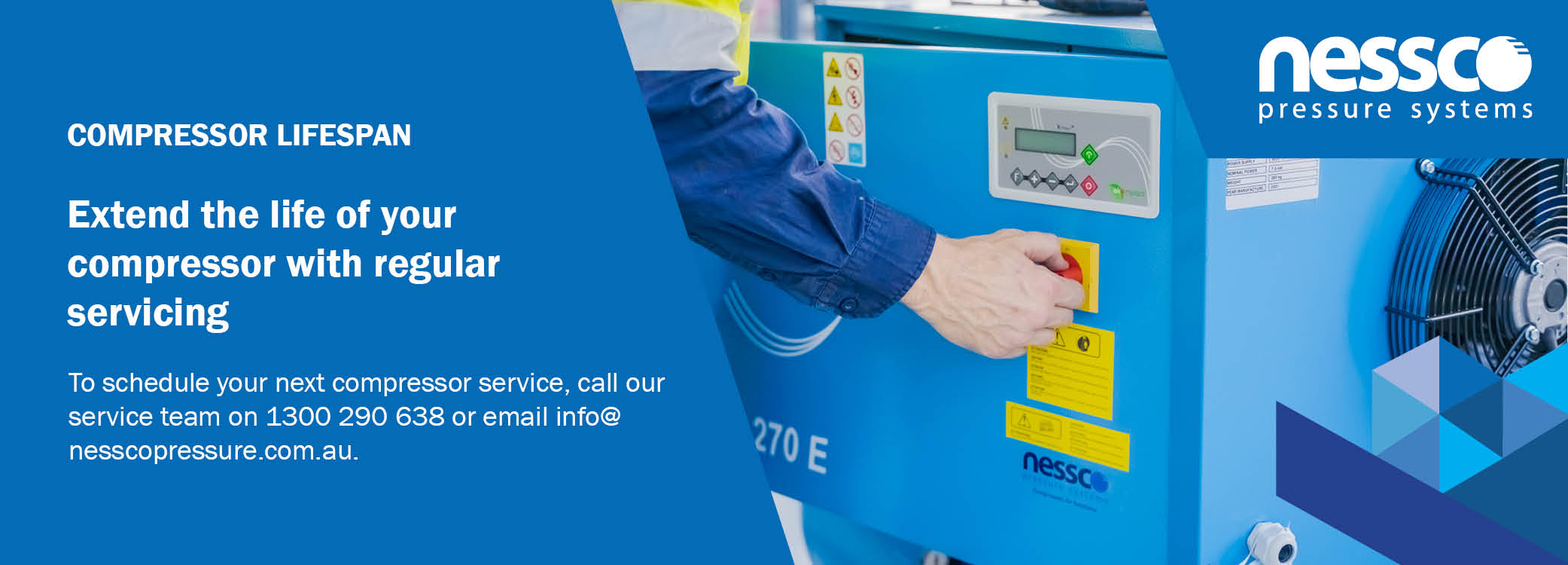
How to Extend the Life of Your Air Compressor
An industrial air compressor is a significant investment, and how you operate and maintain it can affect how long it remains reliable.
There isn’t a standard lifespan for every compressor. Operating hours, application, environment, maintenance history and system demand can all affect equipment condition over time.
Regular servicing plays an important role, but it isn’t the only factor.
Here are some of the areas that can help extend air compressor life and reduce unnecessary wear.
Follow the recommended service schedule
Regular servicing allows technicians to replace service items and inspect the compressor for signs of wear or developing problems.
Depending on the compressor, scheduled maintenance may include:
- Oil and filter replacement
- Air filter replacement
- Separator replacement
- Belt inspection and adjustment
- Cooler inspection and cleaning
- Hose and connection checks
- Valve inspection
- Electrical checks
- Condensate drain checks
Manufacturers commonly specify service intervals by operating hours, elapsed time or a combination of both.
Low operating hours aren’t necessarily a reason to postpone servicing.
Keep the compressor cool
Heat can place additional stress on your compressor and its parts.
Blocked or dirty coolers, poor ventilation and high ambient temperatures can all make it more difficult for the compressor to manage the heat it generates.
Keeping coolers clean and maintaining adequate airflow through the compressor room can help the cooling system work effectively.
If the compressor operates in a hot or confined area, ventilation or ducting may also need attention.
Keep filters and separators in good condition
Filters and separators perform important jobs within the compressor.
As these service items become dirty or reach the end of their recommended operating life, they can restrict airflow, increase pressure differential or affect compressor performance.
Replacing them according to the manufacturer’s maintenance schedule helps the compressor operate as intended.
Pay attention to oil condition
For oil-injected compressors, the correct oil helps lubricate, cool and protect internal parts.
Oil condition can deteriorate over time due to heat, operating conditions and contamination.
Using the correct compressor oil and replacing it at the recommended interval helps protect internal parts from unnecessary wear.
Don’t ignore changes in how the compressor operates
A change in compressor behaviour can provide an early indication that something needs attention.
This might include:
- Higher operating temperatures
- Unusual noise or vibration
- Increased oil consumption
- Frequent alarms or shutdowns
- Changes in pressure
- Longer running periods
- Increased moisture
- More frequent loading and unloading
Investigating these changes early may prevent a relatively small issue from developing into a more significant repair.
Look beyond the compressor
The rest of the compressed air system can also affect how hard your compressor needs to work.
Air leaks, excessive operating pressure, pressure drop, inadequate storage or changes in air demand can increase demand on the compressor.
For example, if pressure falls at the point of use, increasing compressor discharge pressure isn’t necessarily the best solution. The cause may sit elsewhere in the system.
Looking at the complete compressed air system can help identify the underlying problem.
Consider the operating environment
Dust, heat, moisture and poor ventilation can all affect compressor operation.
Keeping the compressor area clean and allowing sufficient space for ventilation and servicing can help protect the equipment and make routine maintenance easier.
Site conditions should also form part of equipment selection. A compressor operating in a demanding industrial environment may require different maintenance considerations from one operating in a clean, temperature-controlled area.