
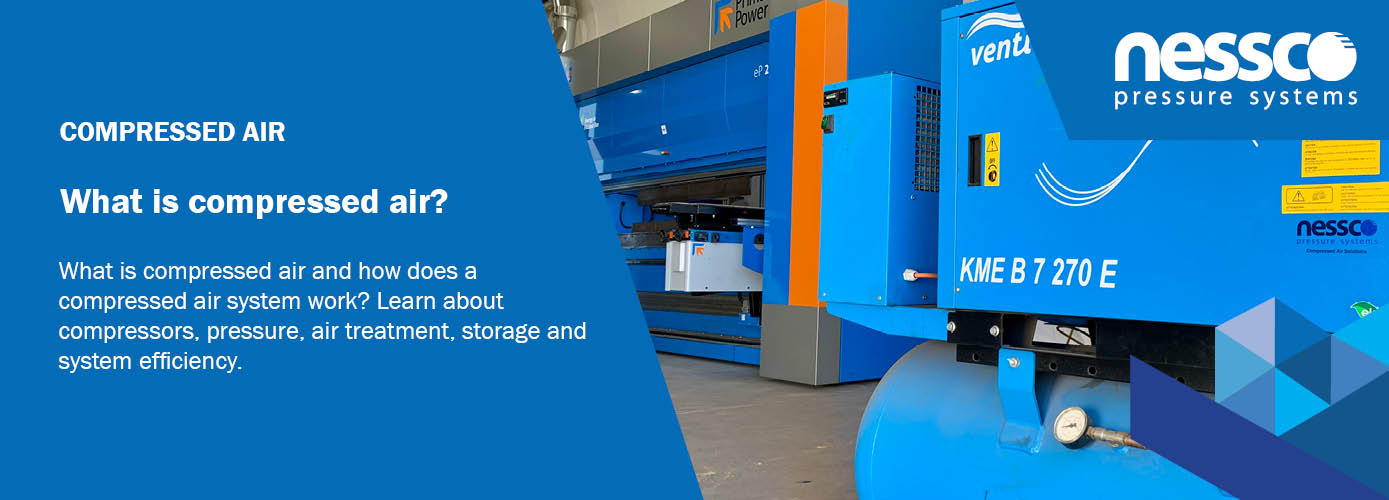
What is compressed air?
Compressed air is used across almost every area of industry, from powering pneumatic tools and production equipment to spray painting, abrasive blasting, material handling and automated processes.
But what exactly is compressed air, and what does it take to produce and maintain a reliable supply?
Essentially, compressed air is atmospheric air that has been compressed to a higher pressure. An air compressor draws in the surrounding air, reduces its volume and supplies it at the pressure and flow required by the equipment or process.
The compressor itself, however, is only one part of the equation.
A reliable compressed air supply depends on the complete system – including the compressor, air treatment, storage, pipework and controls – being correctly selected, installed and maintained.
How does a compressed air system work?
Every compressed air system starts with an air compressor.
The compressor draws in atmospheric air and compresses it to a higher pressure before supplying it to the rest of the system.
From there, the air may pass through several stages of treatment, storage and distribution before reaching the equipment that uses it.
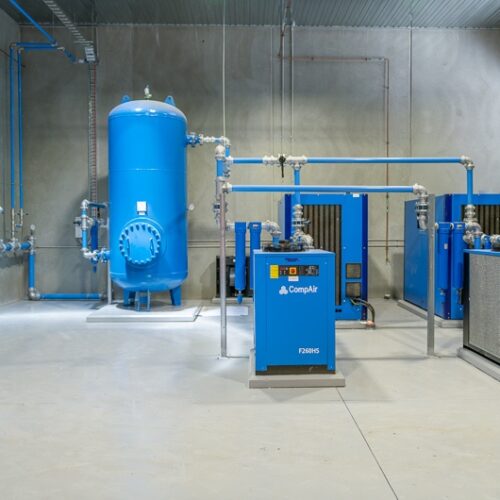
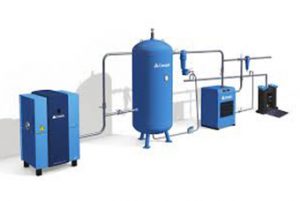
A typical industrial compressed air system may include:
- Air compressor – produces the compressed air.
- Air receiver – stores compressed air and helps manage fluctuations in demand.
- Air dryer – removes moisture from the compressed air.
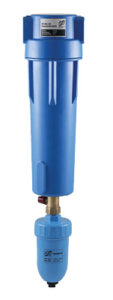
- Filters – remove oil, water and particulates where required.
- Pipework – distributes compressed air around the site.
- Drains and separators – help manage condensate produced by the system.
- Controls and valves – manage the operation of the compressor and wider system.
Not every compressed air system will have the same configuration.
The equipment required depends on what the air is being used for, how much air is needed, the required pressure, operating hours and the required air quality.
What is compressed air used for?
Compressed air is widely used because it can support a large range of industrial equipment and processes.
Common applications include:
- pneumatic tools and workshop equipment
- manufacturing and production machinery
- automated equipment
- spray painting
- abrasive blasting
- material handling
- packaging and processing
- cleaning and blowing applications
- mining and construction equipment
- breathing air systems.
The requirements can vary considerably between applications.
A workshop running pneumatic tools, for example, will have different compressed air requirements from a production facility operating automated machinery or a business supplying compressed air for respiratory protection.
Understanding the application is therefore an important part of selecting and maintaining the right compressed air system.
Pressure and flow: What’s the difference?
Pressure and flow are two of the main considerations when sizing or assessing a compressed air system.
Pressure is the force of the compressed air and is commonly measured in bar or pounds per square inch (psi).
Flow is the volume of compressed air being supplied over a period of time and is commonly measured in cubic feet per minute (CFM) or litres per second.
Your equipment needs sufficient pressure to operate correctly, while your compressor needs to provide enough airflow to meet demand.
When a system isn’t performing as expected, increasing the pressure isn’t necessarily the answer. The issue may instead be insufficient compressor capacity, pressure drop, leaks, restricted filters, pipework or another part of the system.
Looking at both pressure and flow helps identify what is actually happening within the system.
Why does compressed air contain moisture?
Atmospheric air naturally contains water vapour.
When this air is compressed and then cools within the compressed air system, water can condense.
Without suitable air treatment and condensate management, that moisture can contribute to corrosion, affect pneumatic equipment and create problems with downstream processes.
Depending on the application, a system may use equipment such as refrigerated or desiccant dryers, filters, condensate drains and oil-water separators to manage moisture and other contaminants.
Regular maintenance is also important. A dryer or filter can only do its job properly when it is correctly sized and maintained.
Does compressed air need to be filtered?
The air entering a compressor can contain dust, water vapour and other airborne contaminants. Oil can also be present in the compressed air depending on the compressor and system.
The level of filtration required depends on how the compressed air is being used.
General workshop air, for example, may have very different air quality requirements from compressed air used for specialist equipment, manufacturing processes or breathing air.
Filters and dryers can be used in different combinations to achieve the required air quality.
Where compressed air is being supplied for breathing air, additional requirements apply. Nessco Pressure Systems provides breathing air testing against applicable standards and recommends testing every three to six months, depending on the application, working environment and filtration system.
What does an air receiver do?
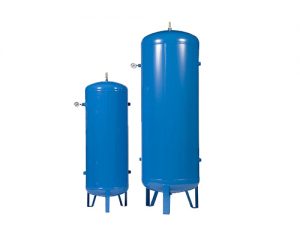
An air receiver stores compressed air and provides additional capacity within the system.
It can help accommodate short periods of higher demand and reduce fluctuations in system pressure.
But an air receiver is also a pressure vessel, which means its condition and compliance requirements should not be overlooked.
In Western Australia, applicable air receivers need to be registered and inspected in line with WorkSafe WA requirements and the relevant Australian Standards.
For receivers requiring periodic inspection, external inspections are generally carried out every two years, with internal inspections every four years in accordance with AS/NZS 3788:2024.
If you’re unsure when your receiver was last inspected, check the inspection sticker on the vessel or speak with our service team.

Is compressed air energy efficient?
Compressed air is a practical and versatile way to power equipment, but producing it requires a significant amount of energy.
How efficiently that energy is used depends on the design, condition and operation of the complete compressed air system.
Common sources of unnecessary energy use include:
- compressed air leaks
- operating at higher pressure than required
- restricted or poorly maintained filters
- inappropriate compressor sizing
- excessive pressure drop
- inefficient compressor control
- poorly designed pipework
- using compressed air where another method may be more suitable.
Leaks are particularly easy to overlook.
One small leak may not appear significant, but multiple leaks across a facility can increase demand on the compressor and waste energy every time the system is operating.
Compressed air audits and leak detection can help identify these losses and provide practical recommendations for improving system performance.
Choosing the right compressor
There isn’t one compressor type or size that suits every application.
Before selecting a compressor, we look at factors including:
- required pressure and flow
- operating hours
- changes in demand throughout the day
- application
- required air quality
- compressor room conditions
- current and future capacity
- available power
- redundancy requirements.
The way compressed air is used is particularly important.
A compressor supplying relatively consistent demand may require a different solution from a system where demand regularly increases and decreases throughout the day.
Fixed-speed, variable speed drive (VSD), piston and diesel compressors all have applications where they may be suitable. Correct selection comes down to understanding what the system actually needs to deliver.
Why regular compressor servicing is important
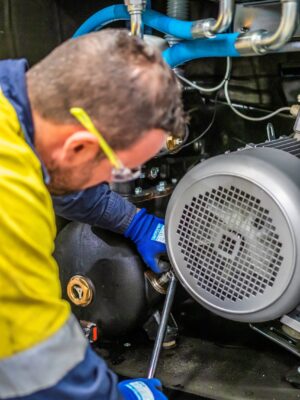
Like any industrial equipment, an air compressor requires regular servicing.
Filters, lubricants, separators, valves, hoses, cooling systems and electrical parts all have maintenance requirements and expected service lives.
Regular servicing allows these items to be checked and replaced in line with manufacturer recommendations. It also gives our technicians an opportunity to identify wear, operating conditions or developing problems that could affect reliability.
That could be something within the compressor itself, or an issue elsewhere in the system – such as excessive heat in the compressor room, moisture, air leaks, restricted airflow or ageing downstream equipment.
At Nessco Pressure Systems, we service all major compressor brands and provide a written service report with practical recommendations following your service.
Your compressor is only part of the system
When we assess a compressed air system, we don’t just look at the compressor.
The compressor needs to work together with the air treatment equipment, receiver, pipework, controls and point-of-use equipment to provide the pressure, flow and air quality required by your operation.
For more than 20 years, Nessco Pressure Systems has supported compressed air systems across Perth and regional WA.
As compressed air specialists, our services include:
- compressor servicing and preventative maintenance
- compressor breakdown support
- new compressor sales and installation
- air receiver inspections
- breathing air testing
- compressed air audits and leak detection
- dryers and filtration
- compressed air pipework and installations
- system upgrades and commissioning
- compressor rental from 15–90 kW.
Whether we’re servicing an existing compressor, investigating a performance issue or designing a new installation, we look at the complete system and how it is being used.
Need help with your compressed air system?
Not sure whether your compressor is correctly sized, when it was last serviced or whether other parts of your compressed air system need attention?
Our team can help you assess your existing system and provide practical recommendations based on your equipment and application.
Call our service team on 1300 290 638 or contact us to discuss your compressed air requirements.
Frequently asked questions about compressed air
What is compressed air used for?
Compressed air is used across a wide range of industrial applications, including pneumatic tools, manufacturing equipment, automated machinery, spray painting, abrasive blasting, material handling and breathing air systems.
The pressure, flow and air quality required will depend on the application, which is why the compressor and wider system need to be selected to suit how the air will actually be used.
Why does compressed air contain water?
Atmospheric air naturally contains water vapour. When air is compressed and then cools within the system, this moisture can condense.
Dryers, filters and condensate drains help manage moisture within a compressed air system. Keeping this equipment properly maintained is important for protecting downstream equipment and maintaining the required air quality.
How do I know what size air compressor I need?
Compressor sizing isn’t based on motor power alone. You need to consider the required pressure and airflow, operating hours, demand throughout the day, application and any plans for future expansion.
An oversized or undersized compressor can create its own operating and efficiency issues, so we recommend assessing the requirements of the complete compressed air system before selecting new equipment.
How often should an air compressor be serviced?
Service intervals vary depending on the compressor, operating hours, application and working environment. The manufacturer’s recommended maintenance schedule should be used as the starting point.
Regular servicing allows filters, lubricants, separators, valves, cooling systems and other service items to be checked and replaced as required. It also gives your technician an opportunity to identify developing issues before they contribute to a breakdown.
How can I make my compressed air system more efficient?
Start by looking at the complete system rather than the compressor alone.
Air leaks, unnecessary operating pressure, restricted filters, pressure drop, inappropriate compressor sizing and inefficient control can all increase energy use. A compressed air audit can help identify where air and energy are being lost and provide practical recommendations for improving system performance.