Compressed air FAQs

Have a question about your air compressor or compressed air system? We’ve brought together answers to some of the frequently asked questions our team receives from businesses across Perth and regional Western Australia.

From routine compressor servicing and breakdowns to air receiver inspections, breathing air testing and equipment rental, there’s a lot to consider when managing a compressed air system.

Drawing on more than 20 years of experience supporting WA industry, our FAQs cover servicing requirements, equipment maintenance, workplace compliance, system performance and more.

Browse the topics below to find the information you need.

If you have a question about your compressed air system, call our team on 1300 290 638 or submit a query through our contact us page.
Compressor servicing and maintenance

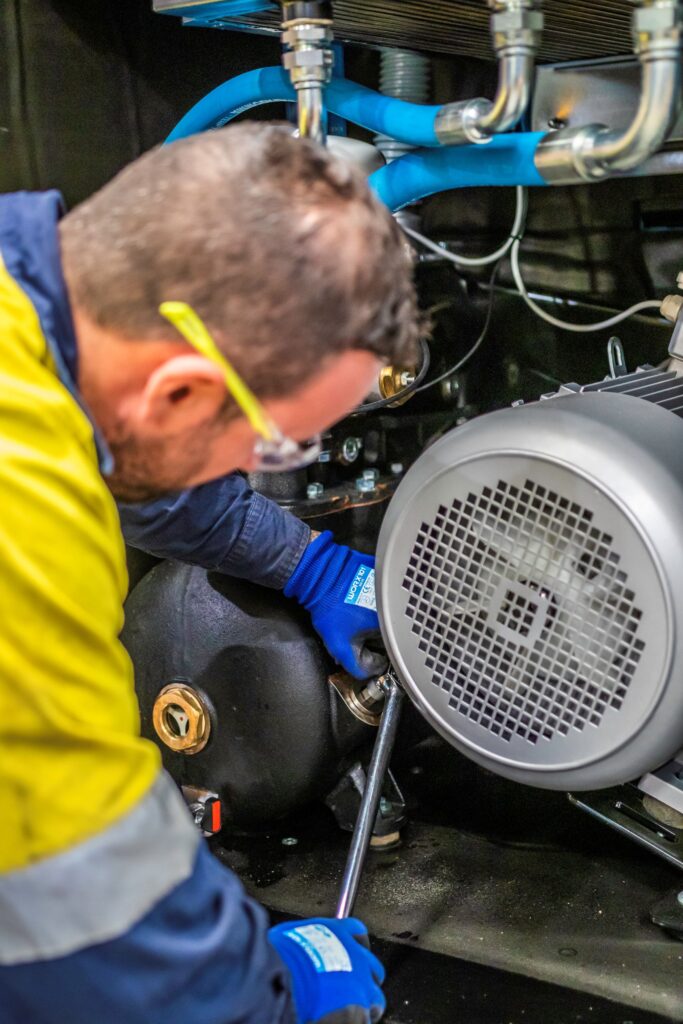
Regular servicing helps keep your compressor reliable and reduces the risk of unexpected breakdowns. Find answers to common questions about service intervals, maintenance and repairs.

Does NPS service all types of air compressors?

Yes. We can service any air compressor on the market.

Why do I need to service my compressed air system?

Regular servicing and check-ups will ensure it remains reliable and increases the life of the system.

Compressed air system maintenance is similar to that performed on cars; filters and fluids are replaced, cooling water is inspected, belts are adjusted, and leaks are identified and repaired.

If your compressor is not well maintained, it can cause multiple problems within the system and produce contaminated air to your end product – which can damage your tools and overall production.

How often should I service my compressor?

How often you service your compressor depends on how often you run your compressor.

Your service schedule should outline what is required for your compressor, but if you don’t have a current schedule or aren’t sure when to book your next service, call our team on 1300 290 638.

We’ll create a service schedule that fits both your compressor and your business, helping you stay productive and minimising downtime due to breakdowns.

Do filters need replacing?

Yes, it’s important to properly maintain your air compressor and filter elements.

Filters are installed in an air compressor to remove any dust or debris the compressor may suck in.

Dust will cause wear to the compressor element, valves, filters, compressor oil and any moving parts. This can increase the risk of breakages and expensive repairs to your system (and the equipment using compressed air such as drills, wrenches and spray guns).

During your scheduled services, our technicians inspect all filters to make sure they’re operating as they should.

How often they need replacing will depend on your compressor use.

If your system hasn’t been checked in the past six months, contact our service team on 1300 290 638 to arrange an inspection.

Do I need to fix air leaks?

Although an air leak may seem like a minor issue, it’s actually the opposite and should be fixed.

Air leaks result in your compressor working overtime to produce the required air pressure for your equipment, increasing running time that can lead to additional maintenance requirements (and increased downtime).

Leaks can also cost you thousands of dollars every year in energy costs.

If you think (or know) you have an air leak in your compressed air system, contact our service team at 1300 290 638 or email info@nesscopressure.com.au.

We’ll detect and repair it for you.

How can I get rid of water from my compressed air system?

Compressed air from a compressor contains water and particles that form unwanted moisture, which must be removed to prevent problems.

Clean, dry air can be obtained by using a water separator, compressed air filter, refrigerant air dryer, condensate drain, and oil–water separator.

Our service technicians can inspect your system and help you solve your water problems.

Email info@nesscopressure.com.au or call 1300 290 638 to book an inspection.

Do I need to replace the pipelines as well as the compressor?

If you’re replacing your compressor with a new, likely more energy efficient compressor, we recommend replacing the pipelines as well – though this conditional on the existing pipework’s condition, suitability and system requirements.

Replacing your existing pipelines with high performance, leak free pipelines will help achieve important energy savings for your business.

For example, installing new, aluminium pipelines and fittings from Infinity Pipeline Systems means you are assured of the most efficient, leak-free piping system available.

Advantages of using aluminuim piping include:

  • Better flow rates
  • Superior ability to withstand extreme climate conditions
  • Minimal expansion and contraction with extreme shifts in temperature
  • Quick and simple installation

If you need to improve the efficiency and operating costs of your compressed air system, get in touch with our compressed air experts by calling 1300 290 638 or emailing info@nesscopressure.com.au.

What does an air compressor service include?

An air compressor service generally includes checking the condition of the compressor, replacing service items as required and inspecting key operating components.

Depending on the compressor and its service interval, our technicians may check the oil, filters, belts, valves, cooling system, electrical components and general operating condition.

We follow the manufacturer’s servicing requirements and consider the equipment’s operating hours, environment and service history.

Can Nessco Pressure Systems service compressors from other manufacturers?

Yes. We service and maintain all major brands of air compressors, including equipment we haven’t supplied or installed.

Whether you operate a piston compressor, rotary screw compressor, fixed speed or variable speed drive (VSD) unit, our technicians can assess your equipment and recommend an appropriate service schedule.

Can you remind me when my compressor service is due?

Yes. We maintain service records for the equipment we look after and can send reminders when servicing is due.

This helps you keep track of scheduled maintenance without having to manage every service interval yourself.

If you’re changing servicing providers, our team can review your equipment details and available service history to establish a schedule.

Why is my air compressor overheating?

Air compressors generate heat during operation, but excessive temperatures can cause the compressor to shut down or damage internal components.

Common causes include blocked coolers, restricted ventilation, high ambient temperatures, low oil levels and problems with cooling system components.

Our technicians can investigate overheating issues and recommend repairs or improvements to the compressor’s operating environment.

How often should I replace my oil-water separator filter elements?

Oil-water separator filter elements need regular replacement to maintain effective condensate treatment.

Many JORC separators have a recommended service interval of 12 months or 2,000 operating hours, although this depends on the model and operating conditions.

We recommend checking your separator during routine compressor servicing and replacing elements in accordance with the manufacturer’s instructions.

Nessco Pressure Systems supplies JORC replacement elements and service kits.

Air receiver registrations and inspections

Not sure when your air receiver was last inspected? Find out about inspection intervals, registration requirements and the documentation you need to maintain.

Why do I need to register my air receiver?

Certain pressure equipment in Western Australia must be registered with WorkSafe WA.

It is important to understand the mandatory requirements and the applicable Australian Standards ensure that your equipment is safe to operate.

Our team of technicians is fully qualified to perform compressed air receiver inspections and registrations. Visit our air receiver inspections page or call 1300 290 638 for more information.

How often is an air receiver inspected?

According to AS/NZS 3788, table 4.1, The required air receiver inspection intervals are;

  • External – every 2 years
  • Internal – every 4 years

When you have your air receivers inspected by Nessco Pressure Systems, you will receive an inspection report after each inspection, and we will also set up a schedule for your next inspection. We handle the reminders and bookings so you don’t have to think about it.

What is a Manufacturers Data Report, or MDR?

The Manufacturers Data Report, or MDR, is a receiver specific document supplied with the air receiver at time of purchase.

The MDR provides information on the manufacture, commissioning & operating parameters of the air receiver.

What documents do I need for an air receiver inspection?

Depending on the equipment and inspection requirements, you may need to provide your air receiver’s Manufacturer’s Data Report (MDR), registration details, previous inspection reports and relevant operating documentation.

Our team can help identify the documentation required for your inspection and advise if anything is missing.

Do pressure relief valves need to be inspected or tested?

Yes. Pressure relief valves are an important safety feature of an air receiver and require five-yearly inspection and testing.

Under AS/NZS 3788:2024, a five-yearly interval commonly applies to pressure relief valve servicing and testing, subject to the equipment’s requirements and operating conditions. At Nessco Pressure Systems we undertake these inspections four-yearly, in line with your two-yearly receiver inspection to save you an additional call out or service visit.

Our team can review your air receiver and associated safety equipment as part of your inspection requirements.

Can you inspect air receivers at our premises?

Yes. Nessco Pressure Systems carries out air receiver inspections at customer sites across Perth and regional Western Australia.

Our team can assess your equipment, review the relevant documentation and advise on the inspection requirements.

Breathing air testing

Compressed air used for breathing applications needs regular quality checks. Learn what breathing air testing involves, how often to arrange testing and why air quality matters.

What is breathing air testing?

Breathing air testing checks the quality of compressed air supplied for respiratory use, including air used with breathing apparatus and air-fed respirators.

Testing helps identify contaminants that may affect the suitability of the air for breathing – these are particles and contaminants that you can’t see or smell.

At Nessco Pressure Systems, we provide breathing air testing for businesses across Perth and regional WA, helping you comply with Australian Standards and regulatory requirements.

How often should breathing air be tested?

We generally recommend breathing air testing every three to six months, depending on the equipment, application and operating conditions.

More frequent testing may be necessary where conditions increase the risk of contamination or where workplace requirements specify shorter intervals.

Regular testing helps identify changes in air quality and supports the maintenance of a safe breathing air supply. It also helps ensure your team are protected and that your business complies to regulations and Australian Standards.

What contaminants are checked during breathing air testing?

Breathing air testing can include checks for carbon monoxide, carbon dioxide, oil contamination, moisture and other relevant contaminants.

The testing requirements depend on the application and applicable standards, including AS/NZS 1715:2009.

Our team will arrange and carry out onsite breathing air testing, prepare a compliance report, advise of any issues or maintenance requirements and schedule your next breathing air test so you can get on with business.

Compressor rental

Need additional compressed air capacity or temporary equipment during a breakdown? Find out about our compressor rental options and what’s included.

Can I rent an air compressor while mine is being repaired?

Yes. Compressor rental can provide a temporary air supply while your existing compressor undergoes repairs, servicing or a major overhaul.

Nessco Pressure Systems offers flexible rental arrangements, with equipment available for different applications and operating requirements.

Contact our service team to discuss the compressor capacity you need and how long you’ll require the equipment.

What size air compressors are available for rental?

Our rental range includes compressors from 15 kW to 90 kW, suitable for a variety of industrial and commercial applications.

The right compressor will depend on your required airflow, operating pressure and site conditions.

Our team can help determine a suitable rental option for your application.

Is servicing included in compressor rental?

Yes. Scheduled servicing is included in our compressor rental agreements, helping keep the equipment maintained throughout the rental period.

We offer flexible rental terms for long-term or permanent production, planned maintenance, breakdown support and temporary increases in compressed air demand.

Compressor breakdown

If your compressor stops working or develops a fault, knowing what to check and who to contact can help reduce downtime.

What do I do in the event of a breakdown?

Compressor breakdowns don’t happen often, but when they do, you want the problem fixed as soon as possible to help minimise downtime for your business.

Our service technicians are available 24/7 for emergency breakdowns. We’ll come out and determine the problem, then get your compressor up and running as quickly as possible.

If you need emergency breakdown assistance for your compressed air system, call our service team on our afterhours number; 08 9333 4940.

What information should I have ready when reporting a compressor breakdown?

When contacting our service team with a compressor breakdown, it helps to have the compressor’s make and model, site location and a description of the problem.

Let us know whether the compressor has stopped completely, is still running but not building pressure, or is displaying any alarms or error codes.

Photos of the compressor’s data plate or controller display can also help our technicians assess the issue before attending site.

Can you repair an air compressor that you didn't supply?

Yes. Our technicians work on all major compressor brands and can investigate faults, carry out repairs and recommend replacement parts where required.

We also undertake more extensive compressor repairs and overhauls at our Welshpool workshop.

For urgent breakdowns, call our breakdown team on 08 9333 4940.

New compressors and accessories

Choosing the right equipment and system layout can affect reliability, energy use and running costs. Explore common questions about compressors, pipework, air treatment and system upgrades.

Does my system ever need to be upgraded?

Not necessarily.

If the number of tools and your production levels are the same from when the system was first installed, then there should be no need for upgrades.

Alternatively, if your workflow has changed and more tools are relying on your compressed air system, then an examination may need to be carried out. This ensures your compressor is not over-working, which can potentially cause breakdown and damage to your system.

We can conduct an air audit to ensure your system is suited to your production levels. Then we’ll provide expert advice and recommendations for your compressed air system.

For more information, contact our service team on 1300 290 638.

What is variable speed drive technology?

Variable speed drive (VSD) allows your compressor to be very flexible and efficient in responding to changes in air demand.

This has benefits for your business, including:

  • Reduced energy consumption (in the proper application)
  • Quieter than a fixed speed when running at a lower RPM
  • Consistent plant pressure – increased component lifetime
  • Less maintenance cost and ease of maintenance
  • Low inrush current during motor starts
  • Compact total solution

Not sure whether a VSD compressor is the right choice for you?

Read more about VSD compressors on our dedicated product page, call 1300 290 638 or email info@nesscopressure.com.au.

Should I choose a fixed speed or VSD air compressor?

The best option depends on how your business uses compressed air.

Fixed speed compressors can be a suitable choice where air demand remains relatively consistent. Variable speed drive (VSD) compressors adjust motor speed to match changing demand, which can reduce energy consumption in suitable applications.

You can read our fixed speed v variable speed drive blog for more information or get in touch with our team, and we’ll assess your air requirements and recommend a compressor that suits your operations.

Still have a question about your compressed air system?

Can’t find the information you need? Our team can help with compressor servicing, breakdowns, air receiver inspections, breathing air testing, rental and new equipment.

We work with businesses across Perth and regional WA, providing practical advice and support for compressed air systems of all sizes.

Call 1300 290 638 or email info@nesscopressure.com.au to discuss your requirements.

Compressed air specialist, Rick, from Nessco Pressure Systems, Perth.
Contact Us
close slider
=